
Morocco brings together Amazigh (Berber), Arab, African, Jewish, Islamic and European influences, reflected in its architecture, cuisine, languages and everyday life. Its landscapes range from the snow-capped Atlas Mountains and Atlantic beaches to palm-filled oases, green river valleys, historic kasbahs and the winding streets of ancient medinas.
Moroccan markets are full of handmade products, including carpets, leather goods, pottery, jewelry and metalwork. Traditional houses, known as riads, and historic kasbahs have also been adapted into guesthouses, offering everything from simple accommodation to more luxurious stays.
Food is another important part of experiencing Morocco. Try traditional tagines prepared with vegetables, chicken or other ingredients, seasoned with spices such as cumin, along with garlic, coriander and saffron. Harira, a hearty soup commonly made with tomatoes, lentils, chickpeas and herbs, is another local favorite. Fresh bread is a staple of Moroccan meals and is often served alongside tagines, salads and other dishes.
The best Morocco tours give you the opportunity to discover these cultural traditions while exploring the country’s different regions. Depending on your interests, you can visit historic cities, meet local artisans, explore mountain villages or include a Sahara Desert experience in your itinerary. Our Morocco tours offer a starting point for planning your trip.
Explore our full range of Morocco tours to find the perfect itinerary for your trip.

Morocco has a long history shaped by its Indigenous Amazigh communities, Mediterranean connections, trans-Saharan trade and successive ruling dynasties.
Amazigh communities have lived in North Africa since ancient times, long before the arrival of Arab populations. In antiquity, the territory of present-day Morocco included several local kingdoms and trading centers. Parts of the north later came under Roman rule, particularly in the province of Mauretania Tingitana, established in the 1st century CE.
Following the decline of Roman authority in the region, the Vandals entered parts of North Africa during the 5th century. Arab expansion reached North Africa in the 7th century, bringing Islam to the region. Over subsequent centuries, Morocco developed its own political and religious institutions, influenced by both local traditions and the wider Islamic world.
Several dynasties played important roles in the country’s development, including the Idrisids, Almoravids, Almohads and Marinids. They helped shape Morocco’s cities, religious institutions, architecture and commercial networks. Some extended their influence across large parts of North Africa and the Iberian Peninsula.
Morocco’s history remains visible throughout the country, from its ancient archaeological sites and historic medinas to its mosques, kasbahs and traditional architecture.
Explore The Best Places


Morocco has maintained connections with Europe through trade, diplomacy and periods of conflict for centuries. From the 15th century onward, Portuguese and Spanish forces established control over several coastal settlements. During the 19th century, European powers competed for greater influence in Morocco because of its strategic position between the Atlantic Ocean and the Mediterranean Sea.
In 1912, Morocco became a French protectorate, while Spain controlled several areas in the north and south. Tangier had a separate international status for part of this period.
Morocco regained independence from France in 1956, and Spain also recognized Moroccan independence that year, although some territories remained under Spanish control afterward. French architectural, linguistic and cultural influences can still be seen in many parts of the country.
Today, Morocco is a constitutional monarchy headed by King Mohammed VI, who succeeded Hassan II in 1999. The country continues to develop its infrastructure, tourism industry and international economic relationships while maintaining many of its longstanding traditions.
The Amazigh, commonly known as Berbers, are the Indigenous people of much of North Africa. Their history in Morocco stretches back thousands of years, and their communities have played a central role in shaping the country’s cultural identity.
Amazigh communities have traditionally lived across the Rif, Middle Atlas, High Atlas and Anti-Atlas regions, as well as in other parts of Morocco. Their cultural traditions include distinctive languages, music, clothing, architecture, crafts and regional customs.
Islam spread through North Africa from the 7th century onward, and Amazigh communities adopted it over time. Before and during this period, religious beliefs across the region varied, including indigenous traditions, Christianity and Judaism.
Major Amazigh-led dynasties, particularly the Almoravids and Almohads, established powerful states whose influence extended across much of North Africa and parts of the Iberian Peninsula.
Today, Amazigh heritage remains an important part of Moroccan identity. Travelers can discover it through local markets, traditional music, regional cuisine, village architecture and the languages spoken in different parts of the country.

For centuries, Amazigh communities contributed to Morocco’s agricultural, commercial and cultural life. Traditional livelihoods included farming, livestock raising, craft production and trade between mountain villages, regional towns and larger cities.
Trans-Saharan trade also connected Morocco with communities farther south. Merchants and camel caravans transported goods across the desert, linking North African trading centers with markets in other parts of Africa.
Today, many Amazigh families continue to live in the Atlas Mountains and other regions, working in agriculture, crafts, commerce and tourism. Their businesses include shops, workshops, guesthouses and enterprises offering visitors opportunities to learn about local traditions.
Morocco’s markets are particularly good places to discover handmade products such as woven carpets, textiles, pottery, jewelry and leather goods. When visiting smaller communities, take time to learn about local customs and ask permission before photographing people.
Our Morocco tour packages can help you plan a trip that includes different regions and opportunities to experience Morocco’s cultural heritage.
Morocco is a multilingual country. Moroccan Arabic, commonly known as Darija, is widely spoken in everyday life. Amazigh is also an official language, with three major varieties commonly discussed in Morocco:
Tarifit: Spoken mainly in the Rif region in northern Morocco.
Central Atlas Tamazight: Spoken in parts of the Middle Atlas and surrounding areas.
Tashelhit (Tachelhit): Spoken widely in the High Atlas, Anti-Atlas and Souss region.
Modern Standard Arabic is used in formal settings, education and media. French is also widely used in business, higher education and some administrative contexts. English is increasingly encountered in tourist areas, particularly among tourism professionals and younger people.
The languages you hear will depend on the region you visit. Many Moroccans speak more than one language, reflecting the country’s diverse cultural and linguistic background.
Morocco is predominantly Sunni Muslim, and Islam plays an important role in religious celebrations, public life, architecture and everyday customs. The country also has a long Jewish history, while Christian communities are present as well.
Moroccan culture reflects Amazigh, Arab, African, Jewish, Islamic and European influences. Hospitality is an important social value, and visitors may be welcomed with mint tea, shared meals or opportunities to learn about local traditions.
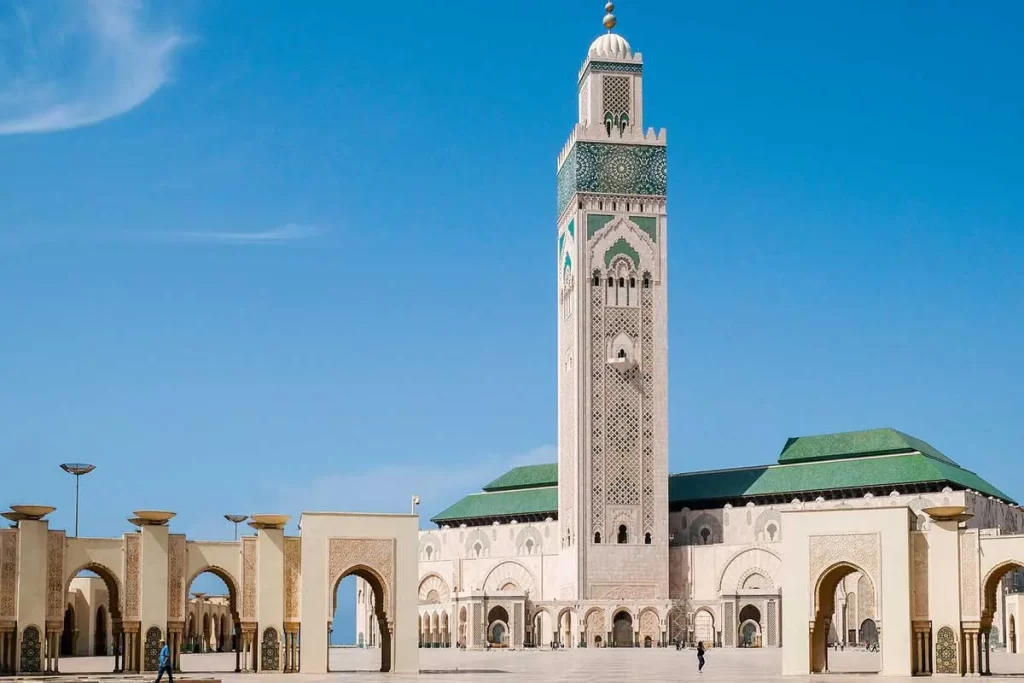
When visiting religious sites, travelers should respect local customs, dress expectations and visitor regulations. Most mosques are not open to non-Muslim visitors, but there are exceptions. The Hassan II Mosque in Casablanca, located beside the Atlantic Ocean, offers organized guided visits to non-Muslim visitors.
Learning a little about local customs before your trip can make visits to medinas, villages, markets and religious sites more rewarding.
Morocco’s climate varies by region, from mild coastal areas and the Atlas Mountains to hot inland cities and the Sahara Desert.
Spring (March–May): Generally pleasant for cities, mountains and desert trips.
Summer (June–August): Coastal areas are milder, while inland and desert regions can be very hot.
Autumn (September–November): Often comfortable for exploring cities, mountains and the Sahara.
Winter (December–February): Coastal areas are milder, but mountains can be snowy and desert nights very cold.
Rainfall: Most rain falls between autumn and spring, depending on the region.
Spring and autumn are often ideal for combining several destinations. For mountain hikes or Sahara camping, check local conditions before booking.
Many international tour operators offer trips to Morocco. Working with a reputable local operator can help you coordinate transportation, accommodation, guides and activities according to your itinerary.
Before booking, check the company’s credentials, read recent independent reviews and confirm exactly what is included in the price. Ask about accommodation, transport, cancellation terms and any additional charges.
Morocco Desert Tour operates under ADT Tourism Agency. Travelers can contact the company to discuss available itineraries and request a proposal suited to their travel plans.
Many visitors travel around Morocco without serious problems, but no destination is entirely free of risk. As in other tourist destinations, travelers should take sensible precautions, particularly in crowded markets, busy squares and transport hubs.
Keep valuables secure, be cautious of unsolicited offers and use reputable transport and tour providers. Check your government’s current travel advice before departure and arrange suitable travel insurance.
If you book a guided trip, confirm the transport arrangements, the services included and how the operator handles unexpected changes or emergencies.
Spring (March to May) and autumn (September to November) are often good choices for travelers who want to combine several regions. Temperatures are generally more comfortable than during the hottest summer months in many inland destinations.
However, the best time depends on your plans. The Sahara can be extremely hot during summer and cold at night in winter, while mountain conditions vary with altitude and season. Check the local forecast when planning hiking, desert excursions or long road journeys.
A guided desert tour can make transportation and accommodation easier to coordinate, especially if you are unfamiliar with the region. Popular destinations include Erg Chebbi, near Merzouga, where visitors can explore the dunes and, depending on their chosen package, arrange a camel trek or an overnight stay in a desert camp.
Before booking, check the itinerary, the vehicle used for each section, the planned activities and what is included in the price. Camp standards, transport arrangements and additional experiences can vary between packages.
Choose a tour that suits your available time, budget and comfort preferences, and confirm the arrangements before paying.
Yes, private itineraries can often be arranged to combine different destinations, depending on your available time, budget and transportation requirements.
For example, a longer trip could begin in Tangier, continue to Chefchaouen, include the imperial cities of Fes and Meknes, and then head toward the Sahara before finishing in Marrakech. The best route depends on how long you have and which places you want to explore.
To discuss a customized itinerary, contact Morocco Desert Tour at moroccodeserttour@gmail.com or via WhatsApp at +212 667 291025.
When making an inquiry, share your preferred travel dates, starting point, destinations and approximate group size. This will help the team prepare a proposal that reflects your plans.